Christ-centered preaching has been one of my passions for many years. About a year and half ago I asked a friend of mine to help me deliver an all-day seminar on the subject for about 60 MTW missionaries and the Latin American leaders they work with. That was in Bogotá, Colombia. The following is my attempt to boil it down to just a few pages.
Introduction
In this article I will explain in a brief manner the essence of what I think it means to preach Christ. My explanation is bounded by three important parameters: (1) the focus of the message, (2) the context of those who hear the message, and (3) the heart attitude of the messenger.
The Focus of the Message
Luke quotes Jesus as saying that the Bible is about himself. It is a Christ-centered message (Luke 24:25-49). Paul says in 1 Corinthians 2:2, “For I resolved to know nothing while I was with you except Jesus Christ and him crucified.” This doesn’t mean that Paul limited himself during his 18-month stay in Corinth (Acts 18:11) to a narrow topic in the Bible. It means, rather, that his message had the proper focus: Christ. Christ is the hero of the story of the Bible, so naturally everything revolves around him. The proper meaning of any passage of the Bible is understood only as it relates to the person and work of Christ. Making use of biblical theology can help us see how to focus every passage of the Bible—even the Old Testament—in a Christ-centered way.[1]
While there are some people who intentionally twist Scripture in a way that makes themselves or their cause the center of Scripture, instead of Christ, there are many preachers whose intention is to preach Christ, but whose audience is not hearing it that way. This is often a result of the preacher not finding the appropriate level of explicitness in making Christ the center. There is a sense in which anything a preacher says, if it comes from the Bible, is a Christ-centered message—at least implicitly so. For example, even just proclaiming the biblical command “Love one another” is a Christ-centered message because it implies the rest of Scripture. So if the hearers can supply the proper biblical context, they will hear it as a Christ-centered message. But if the hearers are not familiar with the whole story of the Bible, or if they have been so captivated by their culture or personality that they fail to interpret the message in a Christ-centered way, then the preacher needs to be more explicit about making Christ the center.
About 15 years ago I told a preacher that I thought his sermons were not sufficiently Christ centered.[2] Before I could explain what I meant, he expressed his indignation and brought the conversation to an end. While he later apologized, he never asked me what I meant. He probably assumed I meant he was preaching doctrinal error. In my view, however, his sermons were doctrinally correct, but not explicit enough in making Christ the center of the story to make a deep impact on his typical audience.
The Latin American cultures in which I have ministered for 30 years clearly need an explicitly Christ-centered approach to preaching. At the beginning of this ministry I would typically use a less explicit approach. As I later talked with those who heard me preach and saw how they were interpreting my words, I learned how important it was to be more explicit in making Christ the center. I have since come to believe that my own home culture in the United States has so drifted from the impact the gospel made on it in the past, and that the church today has for the most part become so captivated by that culture, that more explicit Christ-centered preaching is an urgent and very important need.
One of the typical preaching formulas in many evangelical churches in the United States goes like this:
- Here is some problem caused by sin.
- As a believer you should be doing X to counteract that problem.
- You can’t do X in your own strength. So don’t trust yourself. That would be “works righteousness.”
- If you believe the gospel of grace and stop trusting yourself, Christ will help you do X. He will give you the strength you need to do it.
I call this a “Christ-the-helper” sermon. There is nothing wrong with it doctrinally. But in most cases I don’t think it is explicit enough in making Christ the center to be as effective as it could be. The focus is usually “faith in Christ vs. the works of the flesh.” It is certainly biblical to ask people to trust Christ and not themselves. But the majority of the sermon usually dwells on points 1 and 2 above. Points 3 and 4 are usually mentioned briefly at the end. In other words, the sermon focuses on what we should do (which is an important element of the sermon) and on the fact that Christ can help you do it (which is very true). But the actual presentation of the glory of Christ is assumed as background material.[3] While this approach is biblical, the focus often fails to engage people who don’t have a certain level of biblical understanding. Even those who do, often fail to place this message in a fuller Christ-centered perspective. Even though the preacher intended otherwise, people often leave such sermons, not having been moved by the glory of Christ, but simply wondering whether or not they measure up or are acceptable. They may be thinking about how they can trust Christ more instead of depending on themselves and their own strength. This is good, but if the sermon has not moved them with a vision of the glory of Christ, the hearers may look to themselves for strength to trust Christ more.
This is what I am proposing: design sermons in a way that explicitly glorifies Christ as the hero of the biblical story and of history. I call this a “Christ-the-hero” sermon. Spend a lot of time talking about who Christ is and what he has done. There are so many facets to his heroism, and each passage of Scripture presents a different aspect of his glory. The typical “Christ-the-helper” sermon misses this celebration of the multifaceted glory of Christ, reducing the message to his power–and maybe his love–to help us do what we are unable to do in our own strength. The telling of the story of Jesus as the hero of history—from so many different angles—is designed to move us out of ourselves, to evoke faith in Christ. Once the preacher has presented Christ’s glory, then he should tell the listeners how they should respond in faith—what they should do and how they should be. The motivation to follow through in faith comes from the vision of the glory of Christ. When people leave church after hearing a sermon, they should not be wondering how they measure up, or determining to have more faith in Christ. Rather, they should be overwhelmed with a vision of the glory of Christ the hero and thus moved to faith.
The Context of the Hearers
The Bible was not written as an encyclopedia of truths abstracted from real life. The words of Scripture were written as application of truth to a specific context. That context is always somewhere in God’s world, distorted though it is by sin. To understand the meaning of the words, we need also to understand the context to which they were addressed. Then the preacher, having understood the words of Scripture in their original context, must also apply them to the context of his own hearers. The truth of God’s Word should not be delivered in an abstract, unapplied way. God never intended it to be used that way. God’s Word must be applied to God’s world in order for it to make sense to the hearers.
A key contextual factor in preaching an explicitly Christ-centered sermon has to do with the perceived heroes of that context. I believe that as human beings we can’t help but look for heroes and villains. God made us in his image with the possibility and hope of becoming more like him. Because we were made in God’s image, then, we have a longing for glory. The effect of the fall on this longing is that we look for heroes in all the wrong places. Because of sin people will accept any hero but Christ—including themselves!
Here are two examples of possible local heroes:
- The man who works 14 hours a day to provide for his family.
- The woman who transports her children around to all the opportunities for growth and development.
Here are some examples of possible local heroes in the context of a church:
- The humble person
- The person who trusts Christ and not himself or herself
- The person who lives only for God’s glory
- The pastor who preaches excellent sermons
- The elder who teaches a great Sunday School class
- The church that gives 30 percent of its income to cross-cultural mission
- The pastor who is able to grow his church into a mega-church
There is something good about all of these “heroes,” but they can all become in practice more important than Christ. Preaching Christ effectively to the context involves comparing and contrasting Christ with the perceived heroes of the context. The following questions should be asked in preparing the sermon:
- In what ways does the local hero reflect the glory of Christ?
- How does Christ go beyond the local hero in actually fulfilling what is promised or hoped for?
- How do the local heroes distort the glory of Christ and promote idolatry?
- How does Christ challenge and condemn the local heroes and their idolatry?
The answer to these questions will always be related to the person and work of Christ, and specifically to his death, resurrection, ascension, pouring out of the Spirit and coming again in glory. In this way the preacher shows how Christ identifies with the particular concerns of the audience, while challenging any idolatries associated with them. This comparison and contrast is the key factor in contextualizing the message of the gospel. Referring to local customs and history is good, but this loses its effectiveness unless it is used within the broader context of comparing and contrasting heroes. Unless this is done it is very likely that the audience will filter the message through the perspective of its local heroes. Figure 1 illustrates this filtering process.
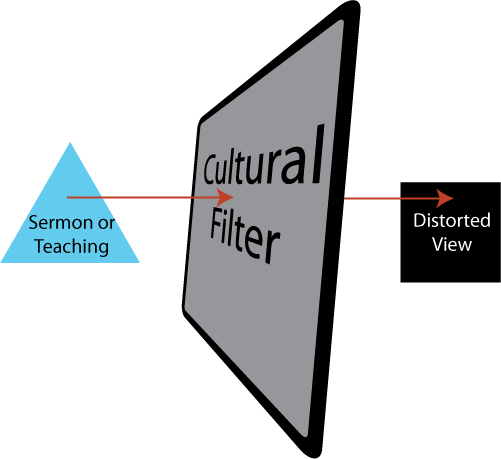
Figure 1. The message is distorted through the cultural filter
So for example, a sermon whose practical implication is using more of one’s time to serve others could easily be domesticated within the cultural filter created by the hero of “The man who works 14 hours a day to provide for his family.” The filter would say, “He’s not talking about you. After all, you’re providing for your family and that’s a biblical thing to do.” The hearer may be so absorbed in his work that he is ignoring his spouse and children. He may not be using his gifts to be a blessing to those the Lord has placed in his path. But the cultural filter becomes a shield that protects him from the life-changing implications of the message.
There are many preachers who will tend to shy away from this kind of application to the context because they would see it as stepping on people’s toes. The fear of not being liked, or of being asked to leave, keeps some preachers from directly challenging cultural heroes and idols. In the method I am suggesting, however, the glory of Christ fulfilling the hopes and dreams of the people and dealing with their fears overshadows the critique of false heroes. The two go together in the same way that repentance and faith do. But the pain of turning away from false heroes melts away in as we see the glory of Christ and believe him.
The Heart Attitude of the Messenger
I recently heard a sermon that was technically very Christ-centered. At the end of the sermon, however, I felt that the preacher himself came across as the hero rather than Christ. This is because he set up his sermon more or less in this way: “This passage that I’ve chosen probably doesn’t seem like it has much to do with Christ. But I’m going to show you that it does.” He proceeded to do so, and, as I said, technically he did an excellent job of using biblical theology to show how Christ was present in the passage. The real hero of this sermon for all practical purposes—the man who is smart enough to take an obscure passage and show how it is Christ-centered—overshadowed the official hero—Christ.
Preachers must indeed master the content of their sermons. But more importantly, they must be mastered by it. They must submit themselves to Christ the hero as they prepare so that when they stand before the congregation they are in awe of him. Only this way will their words and non-verbal communications be in sync with each other and jointly point to Christ.
Tactics such as self-deprecating jokes and comments can sometimes help move attention away from oneself. But this doesn’t necessarily point to Christ. It can be used as a way to deflect attention away from the fact that the preacher really sees himself as the hero.
The formula mentioned above—the “Christ-the-helper” sermon—presents a challenge to the preacher in this regard. The preacher finds himself exhorting people to trust Christ and not themselves as they obey the Scriptural command to do or be such and such. Unless the preacher has already presented a vision of the glory of Christ, he can easily come across as “the expert in trusting Christ instead of self.” I’ve heard some preachers deal with this by adding something like, “I also need to trust Christ and not myself.” Some preachers do this more effectively than others. The more effective preachers in this regard are clearly in awe of Christ.
When the preacher has submitted to the Word he is preaching, the message more powerfully points to Christ as the true hero and thus is more likely to evoke faith in the hearers.
Conclusion
When you prepare or listen to a sermon, ask yourself not simply “Who is the official hero?” More importantly ask yourself, “Who comes across as the hero?” through (1) the focus of the message, (2) the application to the context, and (3) the heart attitude of the messenger. Are cultural heroes challenged by the glory of Christ? Is Christ seen as the one who fulfills in a much greater way what these cultural heroes only pretend to do? There is much more that could be said about preaching Christ, but these three factors—the focus of the message, the context of the hearers, and the heart attitude of the messenger—are what I consider to be the crucial elements of a biblical framework for understanding what it means to preach Christ.
Endnotes
[1] For example, see de Graff’s Promise and Deliverance (Paideia Press, 1980) and Clowney’s The Unfolding Mystery: Discovering Christ in the Old Testament (Presbyterian and Reformed, 1991) See also the seminal work by Geerhardus Vos: Biblical Theology (Banner of Truth, 1975).
[2] I did this not without some fear and trembling and after much prayer and struggle.
[3] Part of the problem may be that many preachers are not sufficiently familiar with how biblical theology brings out the richness of the person and work of Christ in all of Scripture. They assume that to tell the story of Jesus in every sermon would be to repeat the same thing every week. And since most people already know that Jesus died on the cross, rose from the dead and is coming again, why not just bring out the implications for action?

{ 5 comments… read them below or add one }
I like it! It’s clear and thought-provoking.
I think this is a great article. Very clear and persuasive. I appreciate the comment about how preachers can make self-deprecating comments to deflect attention away form the fact that he sees himself as the hero. I think I also do something similar so that it doesn’t appear that I am prideful.
I found my heart being stirred with excitement as I read the article. I easily slip into the “do I measure up” way of thinking, but your sermons and articles always help me to shift my attention off of myself and on to Christ.
I don’t know why I am so prone to worrying about whether I measure up or not. I don’t think the reason is just due to ineffective preaching. Being competent has always been very important to me. I suppose this comes from being an ‘NT’.
It’s true that NT’s like you and me are prone to be concerned about competence. Maybe that’s why I used the phrase “measure up.” But other personality types have their own tendencies of trusting self. For example, some might ask “Am I acceptable?” (and I added that word to the article)
Thanks for posting this.