This year I planted several types of flowers in the vegetable in the garden that are supposed to attract insects that are beneficial to the garden. I have indeed seen beneficial insects, although unfortunately I was unscientific and didn’t have a control to see if there were more this year than last year. Below are some pictures I took of some these insects. Based on my observations, the most popular flowers seem to be those of basil and oregano. (Note that you can double click on the pictures to see a bigger version).
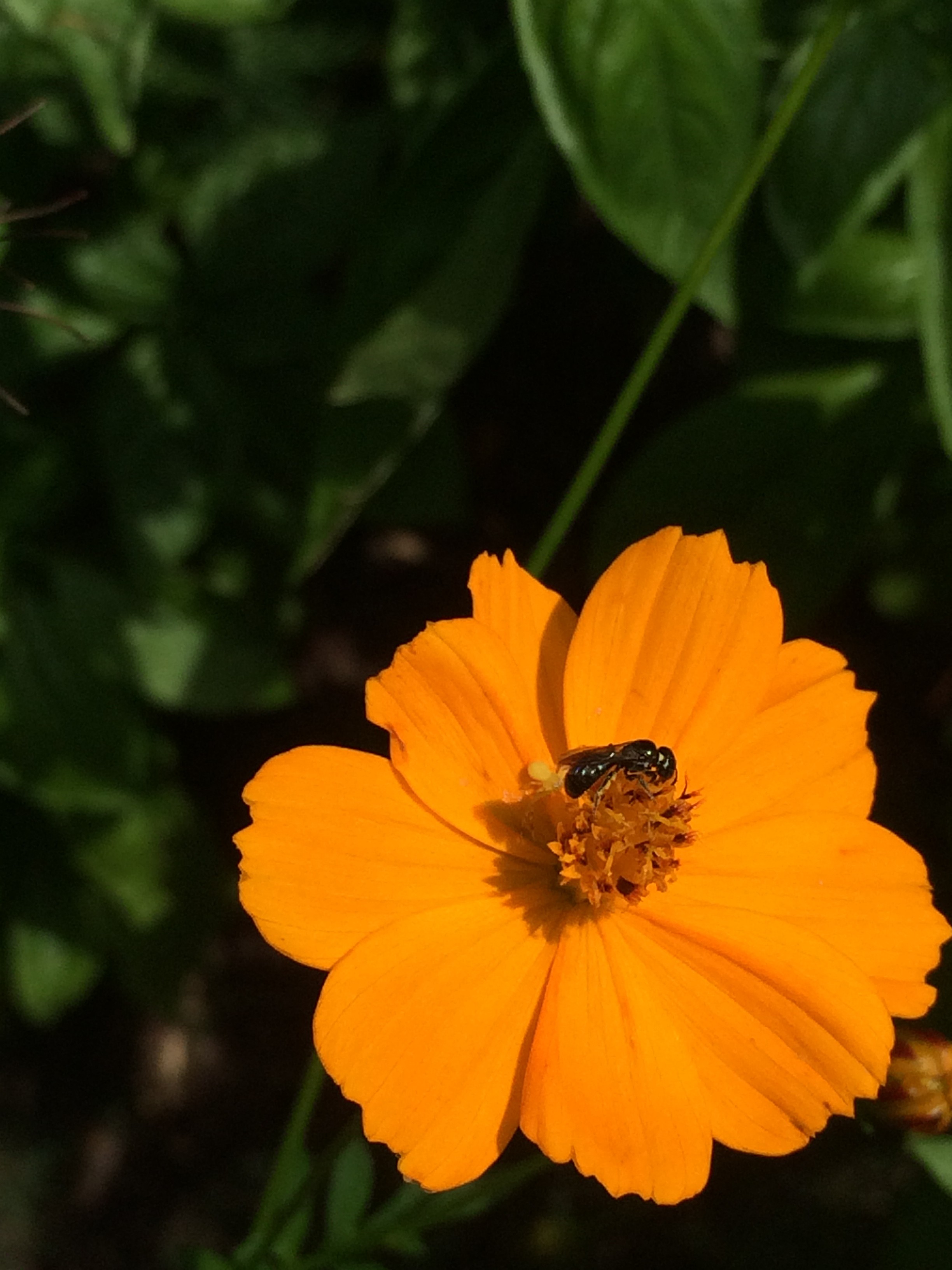
I am not sure, but I think this insect is a type of parasitoid wasp. There are many different types of parasitoid wasps. They lay their eggs in pests such as caterpillars and aphids. The flower is an orange cosmos.
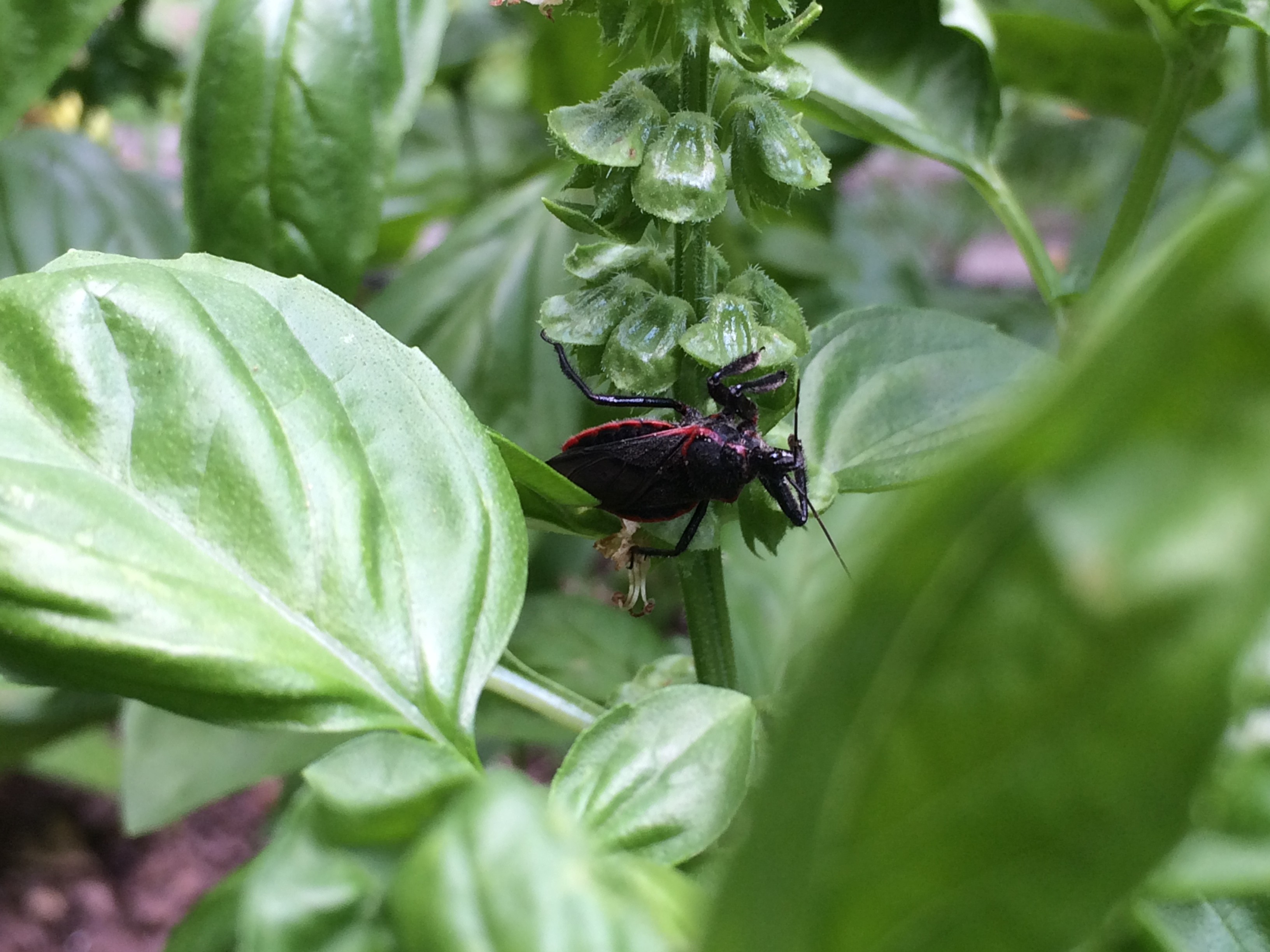
This is an assassin bug on a basil plant. Assassin bugs will actually eat just about any insect.
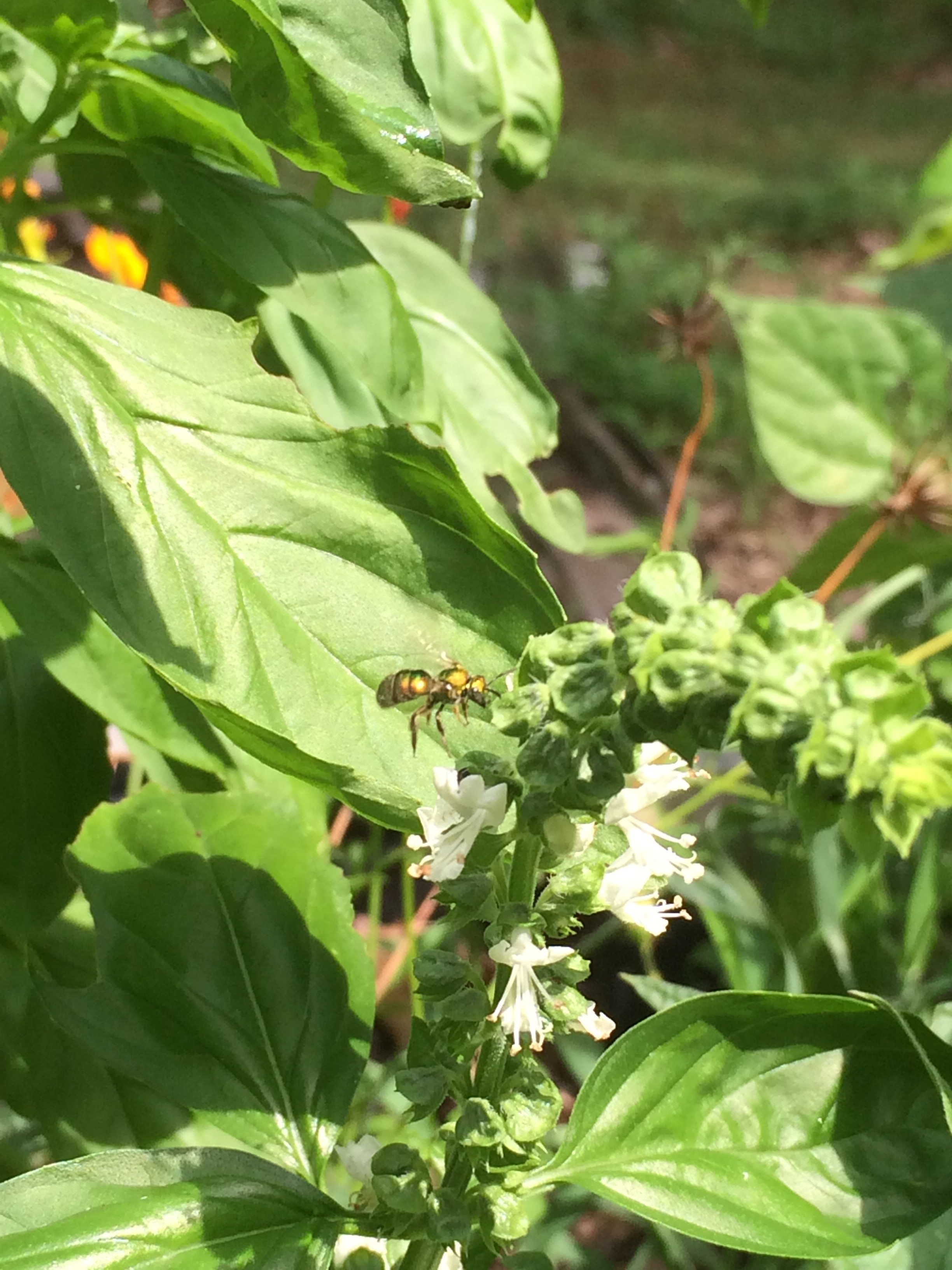
This insect is actually a type of bee. It is called an Augochlora sweat bee. It is not predatory and it does not make honey, but I really like its metallic gold and green colors. It is about to land on a basil plant.
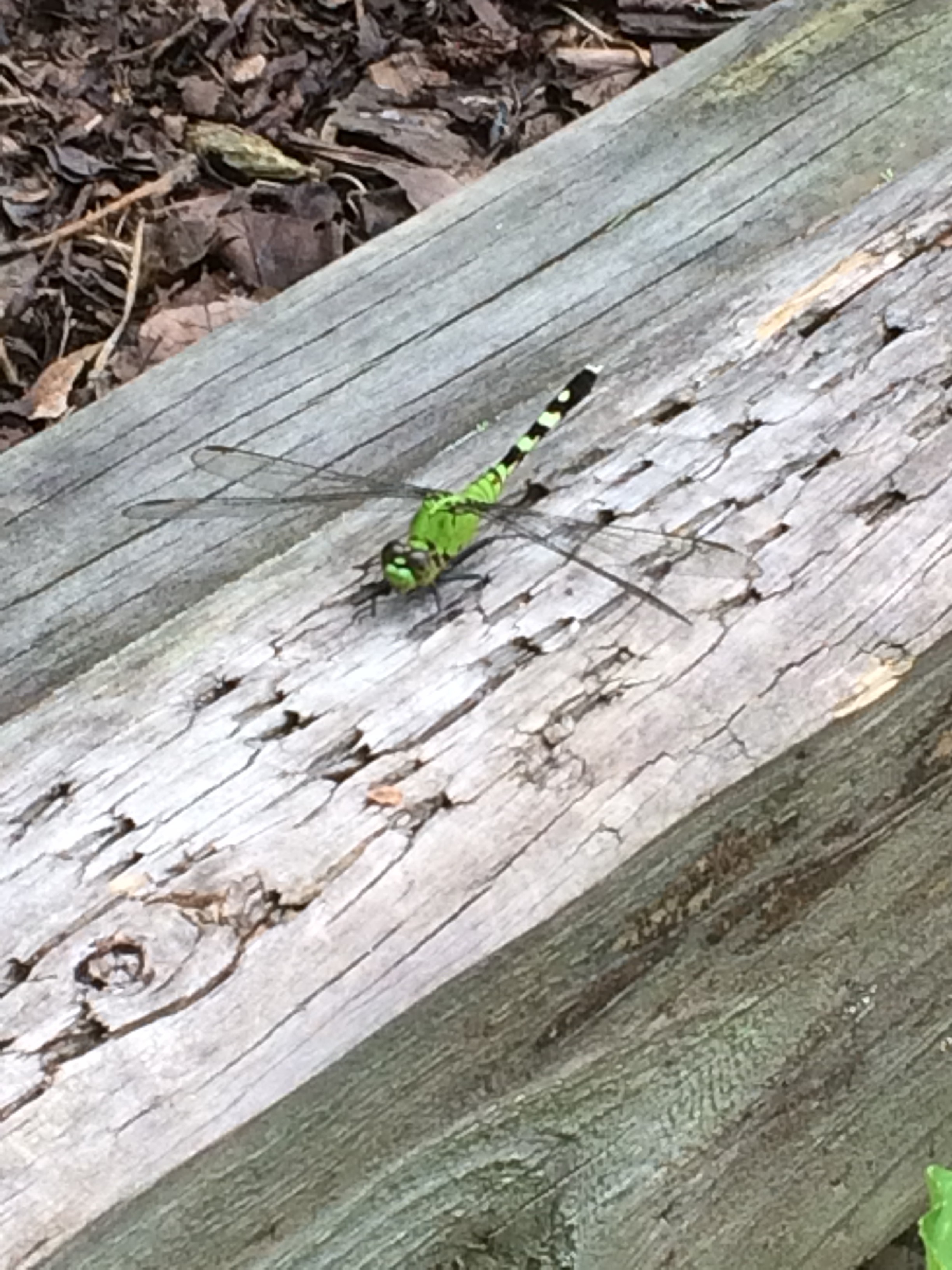
I’ve seen a number dragonflies in the garden. They eat many different kinds of insects, including sometimes the beneficial ones. However, one big plus is that they eat mosquitoes!
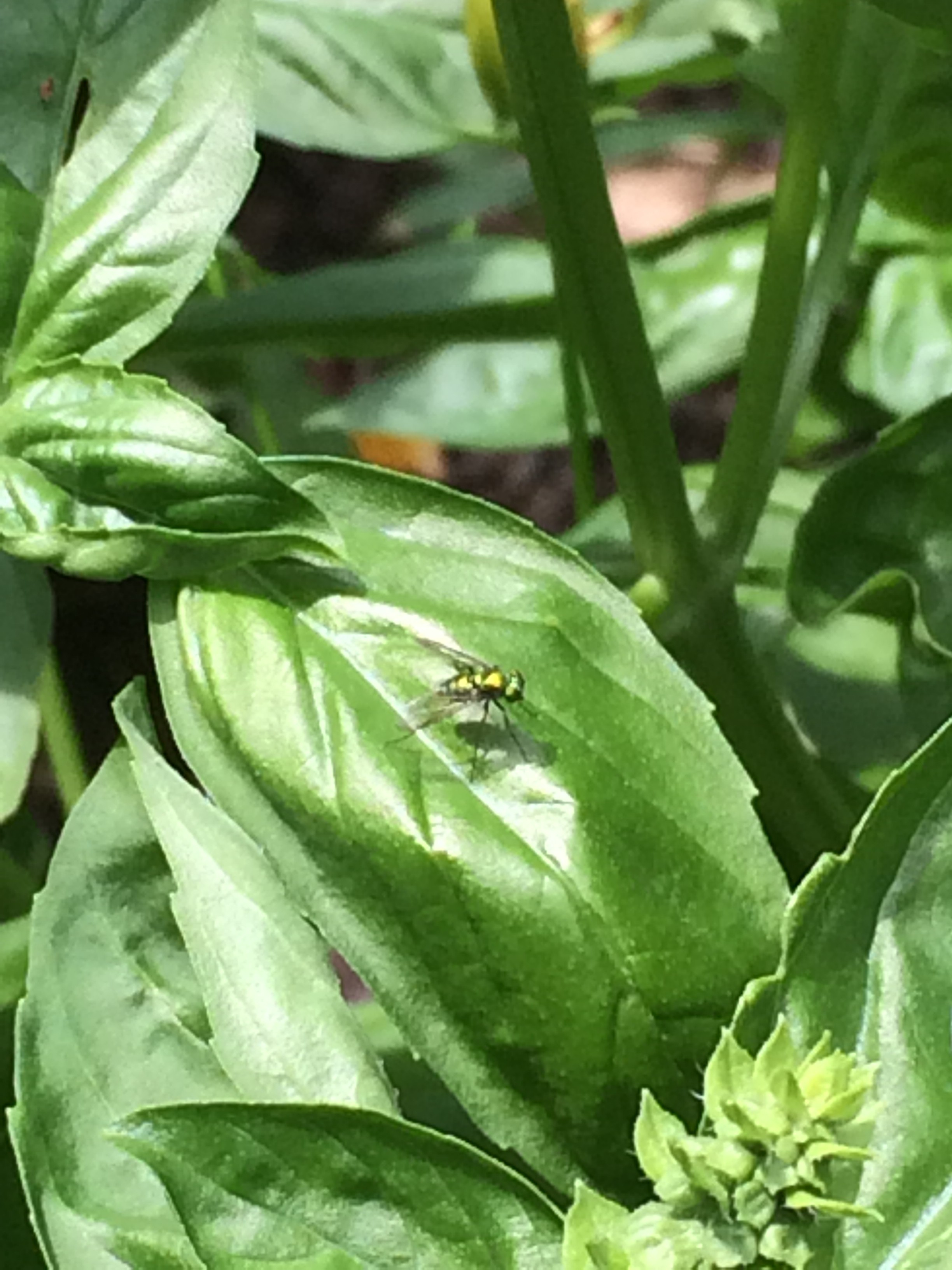
This is a kind of long-legged fly. Long-legged flies eat spider-mites.
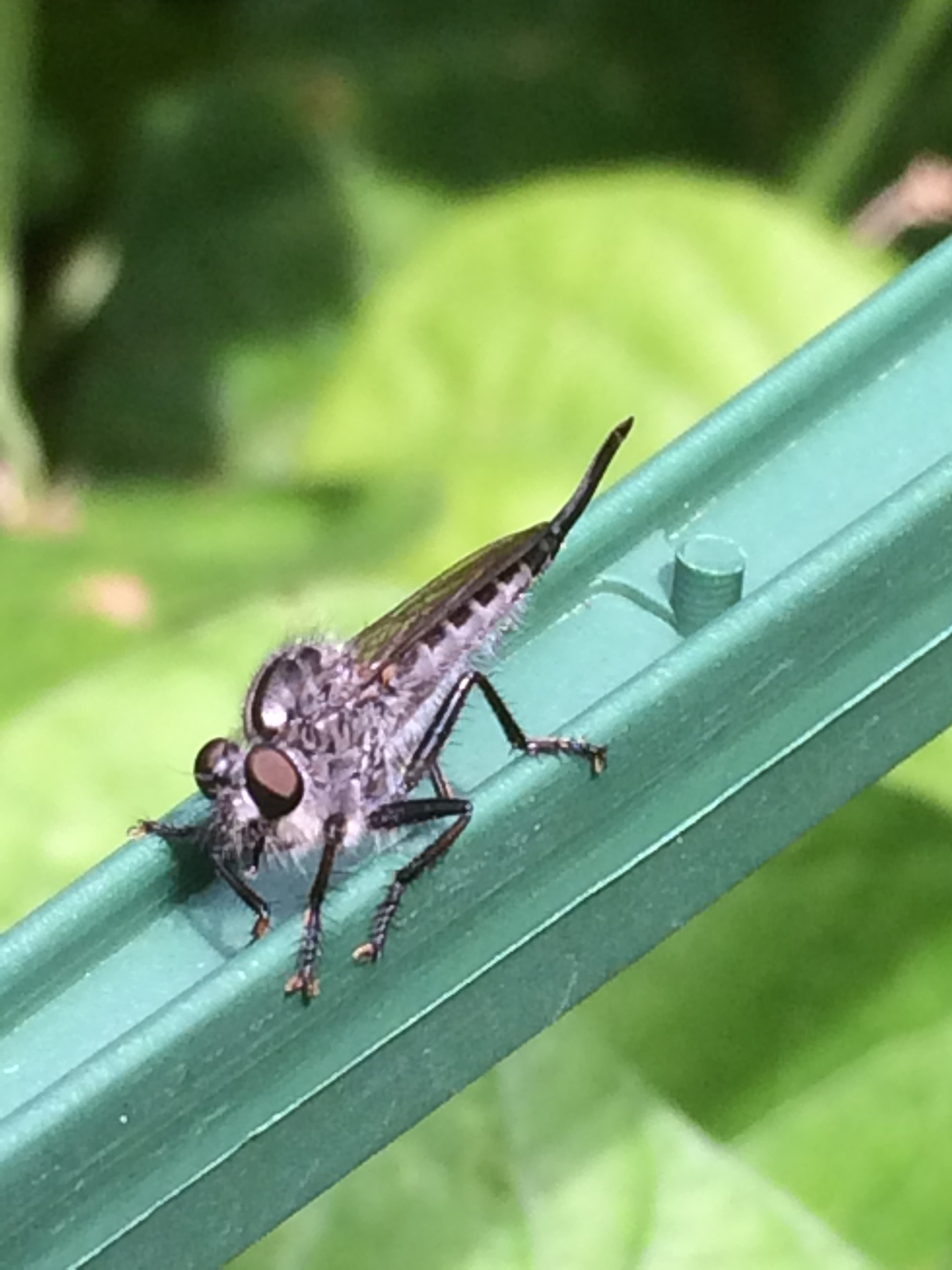
This scary-looking guy is a type of robber fly. They eat things like grasshoppers, aphids, Japanese beetles, and other flys.
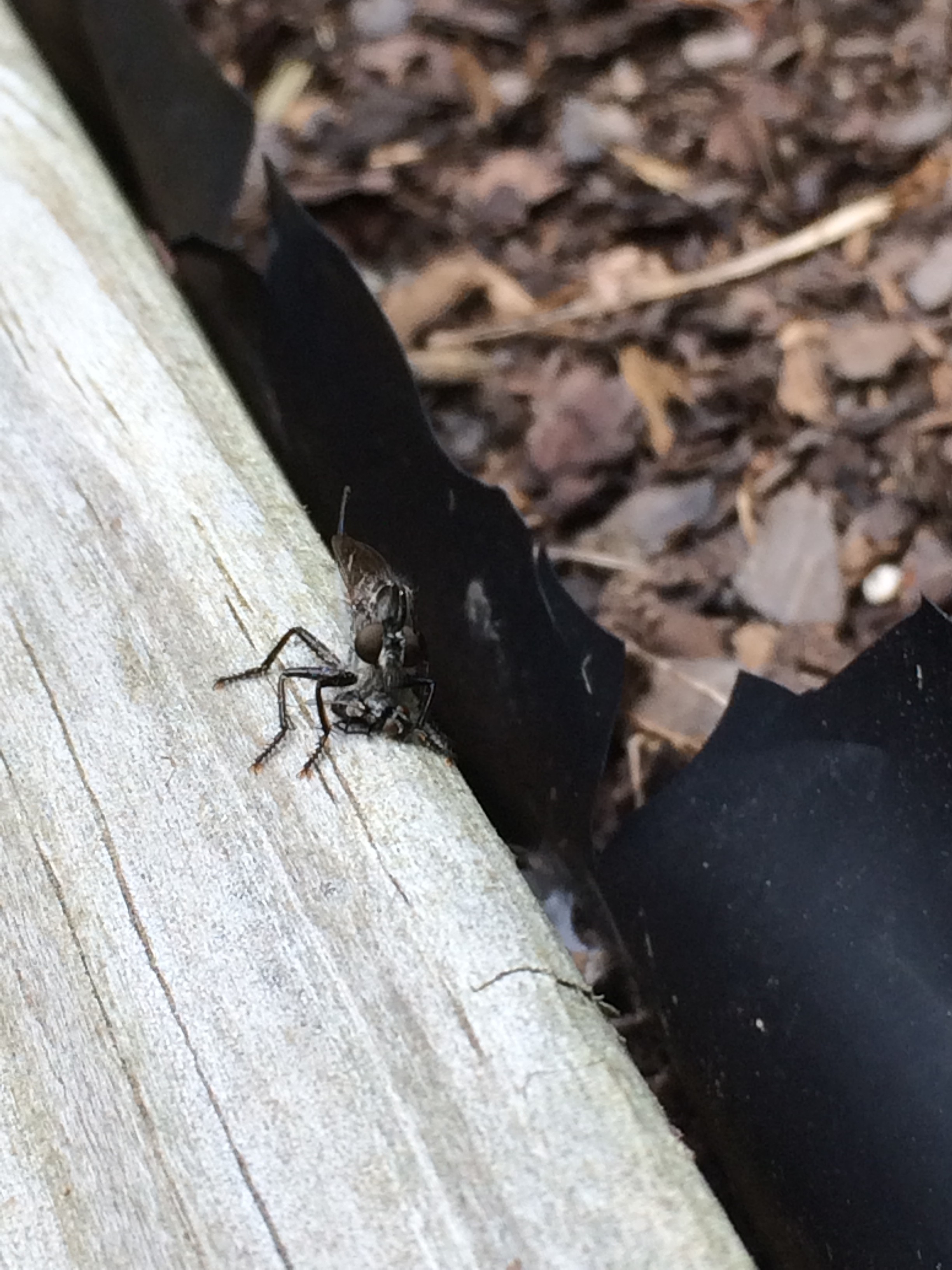
Here you can see a robber fly that has caught a fly.
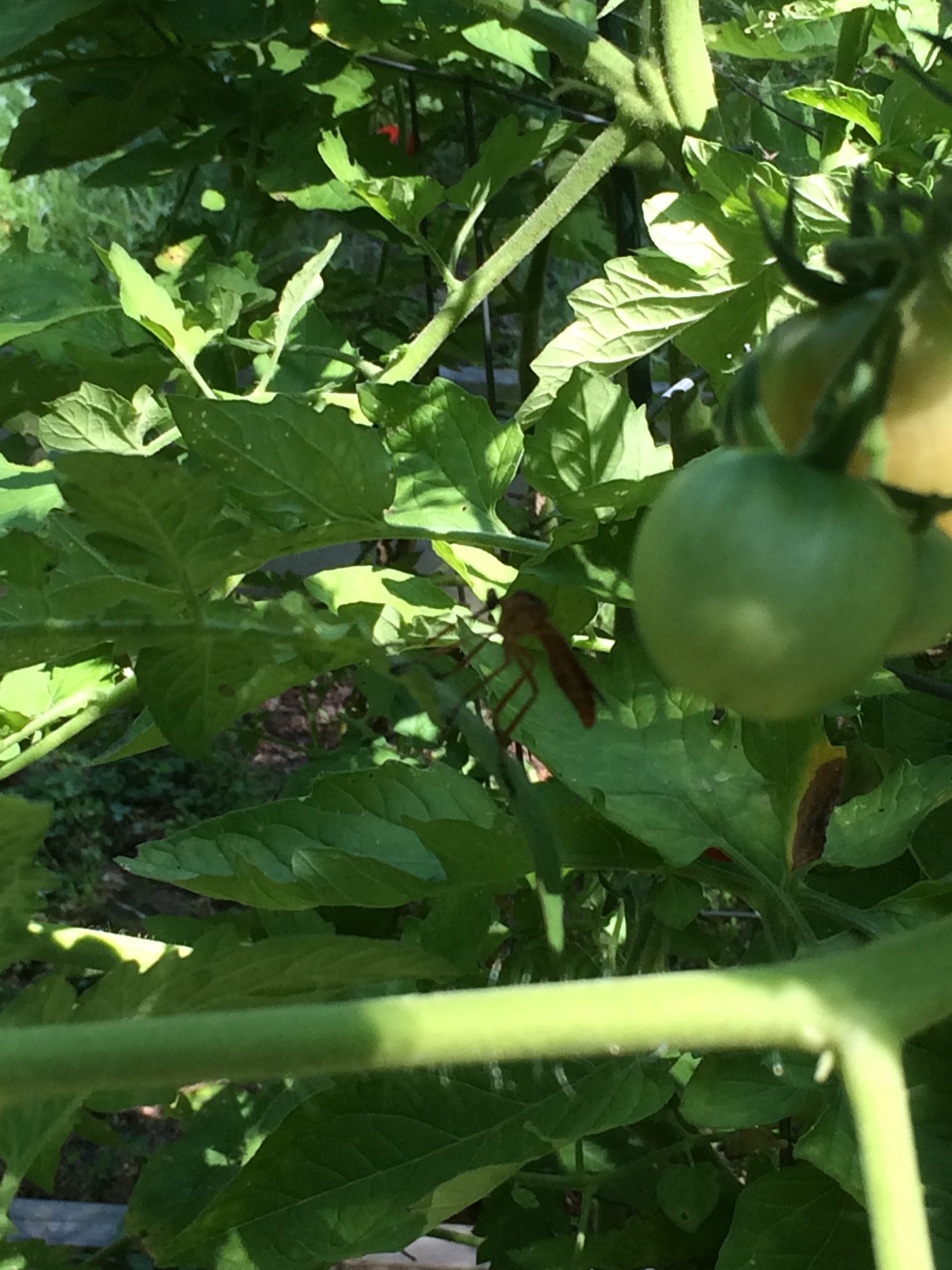
This beast is another kind of robber fly, that is even bigger than the other kind.
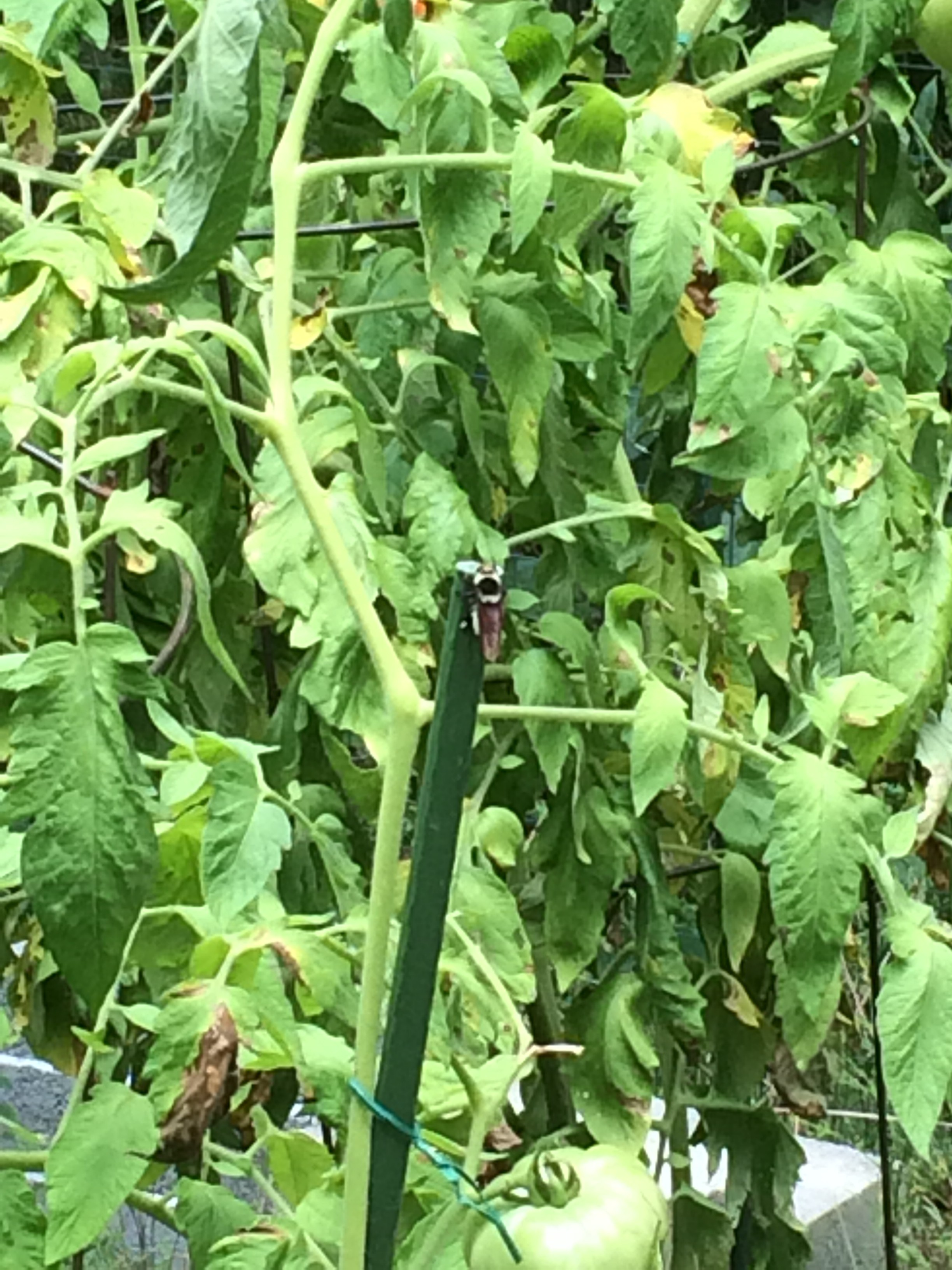
The insect on the green pole may appear to be a bumblebee, but it is actually a kind of robber fly even bigger than the one in the previous picture. This monster uses its camouflage to trap unsuspecting bumblebees. I’ve seen mixed reviews online about whether it is beneficial to the garden. Apparently it eats other things as well. I wanted to take a closer picture, but the guy didn’t let me. If you type “bumblebee robber fly” in google, you should find some closer-up pictures.
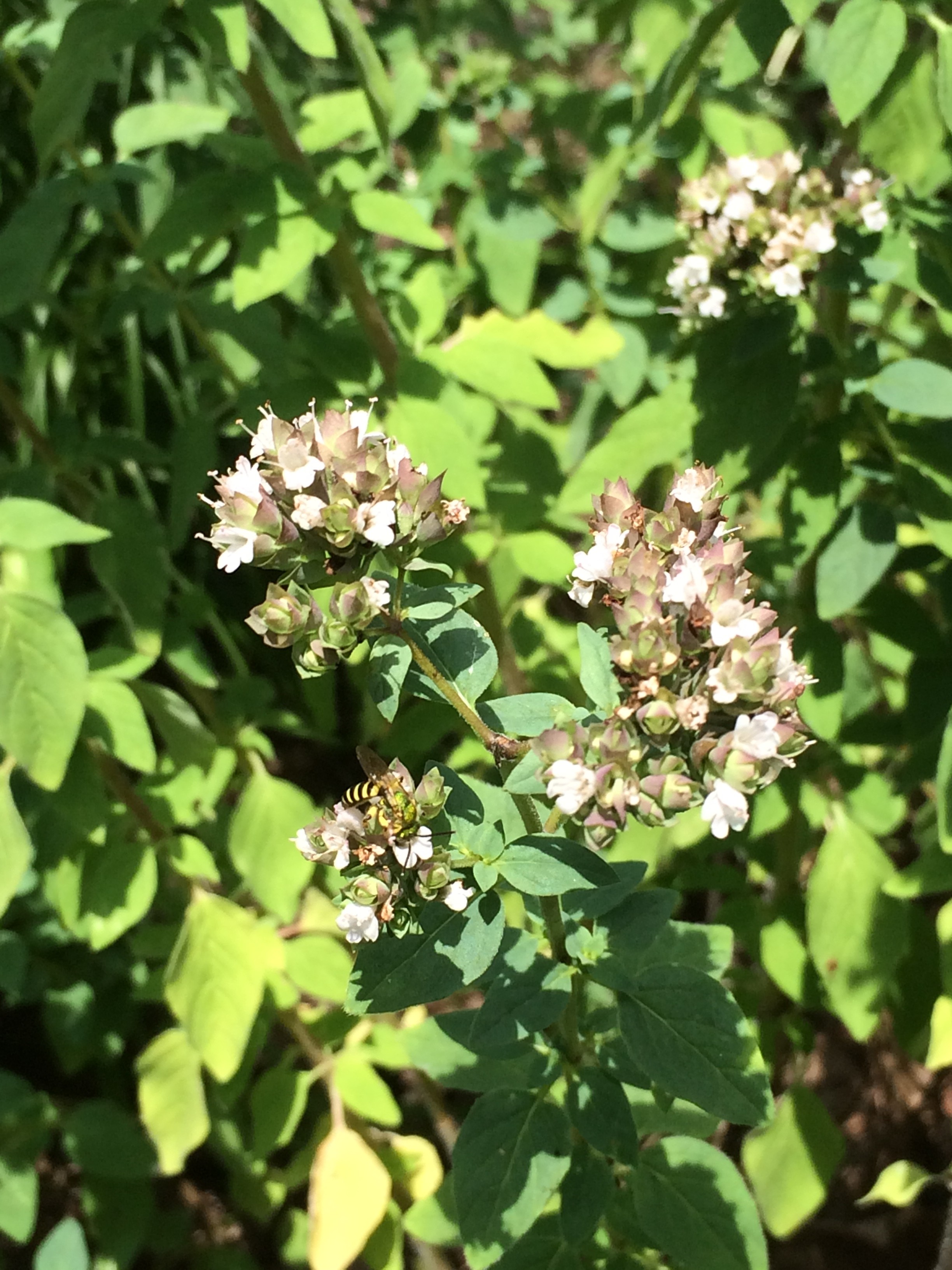
This is an insect that I haven’t been able to identify. It looks like a hornet, but it has a green area on its head. It is on an oregano plant.

{ 9 comments… read them below or add one }
The circle of life! A beautiful reflection of God’s attention to detail.
Good research!
Good information and i know it took a lot of time. Its the bugs that I don’ see and eat the garden that are a problem. One evening our tomatoes looked good, in the morning many of the leaves were stripped???????
Good to know. Thanks.
That is so cool, Seth! I like the pictures and how you researched their names and qualities. It makes me like bugs a bit more 😀
I’m just impressed you were able to get such good close-up shots of these bugs. Did you have a high performance zoom camera, or did you just sit and wait for the bugs to appear?
Grandpa Tom, the tomato plants stripped of leaves sounds like the work of hornworms, which are big green caterpillars. They usually leave behind dark rounded things, which are its excrement. One year, I had to pull off the hornworms by hand and dispose of them myself. They’ve appeared every year I have been back from St. Louis, but the past two years something seems to have eaten them before they could do much damage. I think it must have been a bird of some kind.
James, I just used my iPhone to take the pictures. There were so many bugs around, I didn’t really have to wait around for them to come, and many of them didn’t fly away when I got closer. The dragonfly and the bumble robber fly were the hardest to capture.
Those are really cool pictures, Seth! I enjoyed learning about the bugs, too!